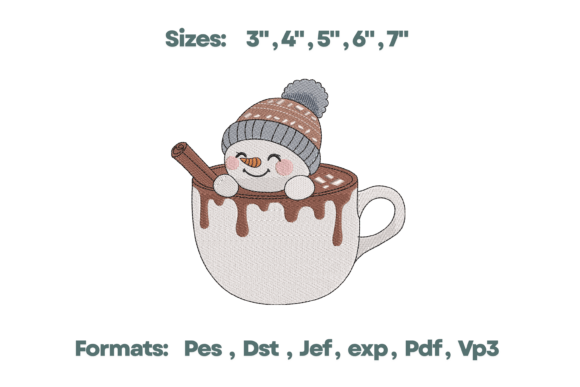
Snowman in Hot Cocoa: A Craft Fair Review
As an embroidery designer who has spent countless weekends behind a booth table, I know that not every cute design translates into a bestseller. We often get swept up in the whimsy of a pattern without considering how it performs on actual fabric under fluorescent convention center lights. Recently, I reviewed the Snowman in Hot Cocoa Embroidery Design with a specific goal in mind: determining its viability for my upcoming winter craft fair lineup. This isn't just about whether the design is adorable; it is about whether it sells.
First Impressions and Visual Appeal
The first thing that strikes you about this pattern is its inherent warmth. In a season often dominated by stark reds and greens, the concept of a happy snowman peeking out from a steaming mug of hot chocolate offers a cozy, inviting aesthetic. It feels less like traditional holiday decor and more like a lifestyle product. For a craft fair product, this distinction is vital. Customers are increasingly looking for items they can use daily, not just display seasonally.
The visual narrative is immediate. You do not need to explain the design to a passerby. The combination of the snowman and the mug creates a story of comfort. This makes it an excellent candidate for a handmade product line focused on home goods and personal accessories. The whimsical nature suggests a playful, modern farmhouse vibe rather than a rigid, traditional Christmas look. This broader appeal allows you to market the item from November through January, extending your sales window significantly.
Product Placement and Versatility
When evaluating where this design shines, I looked at several common small shop product categories. The Snowman in Hot Cocoa Embroidery Design is versatile, but it is not equally effective on every substrate.
- Tote Bags: This is arguably the strongest application. A canvas tote provides a large, flat surface that allows the details of the steaming mug and the snowman’s expression to be clearly visible. As a tote bag design, it serves as a walking advertisement for your brand.
- Aprons: Kitchen linens are huge sellers during the holidays. An apron embroidery featuring this motif adds a touch of personality to a functional item. It appeals to the hostess gift market, which is robust in December.
- Tea Towels: While popular, tea towel embroidery requires caution. The texture of waffle weave or terry cloth can distort small details. If you choose this route, ensure the design size is large enough to maintain clarity against the fabric loops.
- Embroidered Patches: Creating an embroidered patch allows customers to add the design to existing jackets or bags. This lowers the price point entry for buyers who might not want to purchase a full garment.
For Etsy seller accounts, this design also works well for digital listings. You can create a printable mockup showing the design on various items to help customers visualize the final result. High-quality design assets like these increase conversion rates by reducing buyer uncertainty.
Production Practicality and Stitch Density
From a production standpoint, time is money. When preparing for a fair, I need designs that are repeatable and reliable. The Snowman in Hot Cocoa Embroidery Design appears to have a balanced composition, but there are technical considerations. The "steaming" effect above the mug likely involves fine, running stitches. While aesthetically pleasing, these can be fragile if not properly stabilized.
You must pay close attention to stitch density. If the mug area is too dense, it may cause puckering on lighter fabrics like cotton tea towels. Conversely, if the snowman’s face lacks sufficient density, it may look sparse on textured materials. Always test the embroidery file on scrap fabric that matches your production material. Check the thread colors carefully; white thread on a cream mug might get lost, so consider using a slightly off-white or light gray to create definition.
Another critical factor is the hoop size. Ensure the design fits comfortably within your standard hoop without requiring excessive re-hooping, which slows down batch production. If the design is too large for a standard 4x4 or 5x7 hoop, you may need to adjust your product strategy to accommodate larger hoops, which can limit the types of items you can embroider, such as caps or small pouches.
Challenges and Careful-Use Notes
While the design is charming, it is not without its challenges. Here are specific areas where I recommend caution:
- Fabric Texture: Avoid using this design on highly textured fabrics like thick wool or heavy burlap unless you use a strong topping stabilizer. The fine details of the snowman’s features may sink into the pile.
- Dark Fabrics: If you plan to offer this on dark navy or black items, ensure you use a bright white underlay or a high-contrast thread. The steam detail might disappear on dark backgrounds if not properly digitized for contrast.
- Curved Surfaces: Embroidering on caps or curved mugs requires careful hooping. The cylindrical shape of the mug in the design might distort if placed on a highly curved surface like a baseball cap brim. Test this extensively before committing to inventory.
- Small Sizes: Do not shrink this design below a certain threshold. The facial features of the snowman and the rim of the mug need space to breathe. If reduced too much, the design loses its charm and becomes a blurry blob.
Boosting Brand Consistency and Buyer Engagement
Using the Snowman in Hot Cocoa Embroidery Design can strengthen your brand identity if positioned correctly. It signals that your shop offers thoughtful, cozy, and high-quality items. For commercial embroidery businesses, this type of design helps build a cohesive winter collection. When displayed together, a tote, an apron, and a set of towels featuring the same motif create a powerful visual impact in your booth.
Customer attention is drawn to familiarity and comfort. This design taps into the universal love for hot drinks in winter. It invites conversation. A customer might stop to comment on how much they love hot cocoa, giving you the opening to discuss the quality of your stitching and the durability of your finished product. This engagement is crucial for converting browsers into buyers.
Final Designer Recommendations
Before you list this as a digital embroidery file or start stitching your inventory, take these final steps. First, verify the commercial licensing terms. Not all designers allow unlimited sales of finished products, so confirm this detail to protect your business. Second, create at least one real-world mockup. Photoshopped images are helpful, but a photo of the actual stitched item on a linen towel sells the tactile quality of your work.
Finally, consider the stabilizer you use. For soft items like scarves or lightweight totes, a cut-away stabilizer might provide better long-term durability than tear-away, preventing the design from shifting after washing. By treating the Snowman in Hot Cocoa Embroidery Design with professional rigor, you transform a cute pattern into a profitable asset for your handmade business.