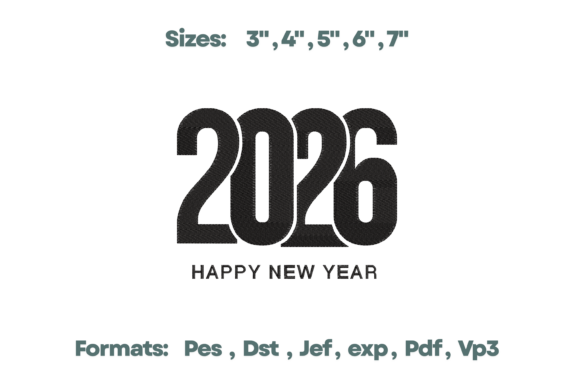
Review: 2026 Happy New Year Embroidery Art
As we approach the end of another year, the rush for fresh Holidays content begins. I have spent the last decade digitizing and testing designs for small businesses, and I know that not every festive pattern holds up under the needle. When I first loaded the 2026 Happy New Year Embroidery Art into my software, I was looking for more than just a date stamp. I wanted a design that could carry the weight of a premium handmade product without requiring hours of troubleshooting. This review breaks down how this minimalist, bold typography performs in real-world scenarios, from custom apparel to boutique home decor.
First Impressions and Visual Impact
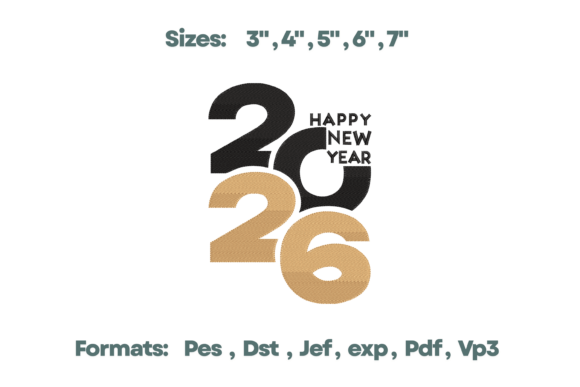
The immediate standout feature of this machine embroidery design is its confidence. Many New Year’s designs rely on excessive confetti, complex fireworks, or fragile script fonts that disappear on textured fabrics. In contrast, this pattern uses clean lines and impactful digitized typography. It feels modern and uncluttered. The mood it creates is one of sophisticated celebration rather than chaotic partying. For an Etsy seller or craft business owner, this visual personality is crucial. It signals quality and intentionality, which helps justify higher price points for finished goods.
The layout is balanced, ensuring that the numbers "2026" and the accompanying text do not compete for attention. This clarity is vital when you are working with a digital embroidery file that needs to scale well across different applications. Whether viewed on a screen in a printable mockup or stitched out on fabric, the design maintains its integrity. It does not rely on tiny, fragile details that might break during washing or wear.
Real-World Application: The Tote Bag Test
To truly evaluate any embroidery project, you must imagine it on a specific product. I visualized this design on a heavy-duty canvas tote bag, a staple item for many small shop products. Canvas has a distinct weave and texture that can distort fine details. Because this design features bold lines, it sits beautifully on the rough surface of canvas. The stitch density appears sufficient to cover the fabric gaps without creating a stiff, cardboard-like patch.
I also considered its use on a fleece sweatshirt. Fleece is notorious for swallowing small stitches. Here, the bold typography of the 2026 Happy New Year Embroidery Art shines. The letters remain legible and crisp against the plush background. This makes it an excellent choice for custom apparel intended for casual winter wear. Customers looking for a personalized gift often prefer designs that are easy to read and stylish enough to wear beyond the holiday season. This design achieves that balance.
Versatility Across Product Lines
Beyond bags and sweaters, this design adapts well to various handmade product categories. Consider these applications:
- Embroidered Patch: The clean edges make it ideal for cut-out patches that can be ironed or sewn onto jackets.
- Kitchen Towels: A simple monochrome version adds a festive touch to holiday hosting essentials.
- Caps and Hats: While curved surfaces are tricky, the compact nature of the text allows it to fit within standard cap frames without distortion.
- Pillow Covers: Centered on a linen pillow, it serves as subtle seasonal decor that doesn’t need to be removed immediately after January 1st.
Technical Considerations for Stitching
While the design is robust, no embroidery file is universal. There are specific scenarios where you must exercise caution. If you plan to use this on thin or stretchy fabrics, such as jersey knits for baby clothes, proper stabilization is non-negotiable. The bold fill areas require a stable base to prevent puckering. I recommend using a cut-away stabilizer for garments that will undergo frequent washing, as this provides long-term support for the stitch structure.
Another critical factor is thread color contrast. Since the design relies on typography, the difference between the thread and the fabric must be sharp. On dark fabrics, ensure your thread colors are bright enough to pop. Conversely, on light fabrics, avoid threads that are too similar in tone, or the message will get lost. Always test the design on scrap fabric before committing to your final product. This step saves time and materials, especially when producing batches for a craft business.
Navigating Hoop Sizes and Density
Before purchasing or downloading, verify the available hoop sizes. This design likely comes in multiple formats to fit standard machine hoops. However, if you are working with a smaller hoop, check if the design can be split or if a scaled-down version retains its readability. Tiny lettering can become a blob of thread if the stitch density is too high for the scale. Inspect the zoomed-in preview in your software to ensure there are no overlapping stitches or unnecessary jump stitches that could cause thread breaks.
For those interested in commercial embroidery, pay attention to the stitch types used. A mix of satin stitch for borders and fill stitch for larger areas is typical for this style. Ensure your machine can handle the density without overheating or skipping. If you are new to digitizing, remember that clean lines do not always mean simple stitching. The transition between the numbers and the text must be smooth to maintain a professional finish.
Enhancing Brand Value and Customer Trust
Using high-quality design assets like this one directly impacts your brand perception. When customers receive a finished product with clear, well-stitched lettering, they associate that quality with your shop. It builds trust and encourages repeat business. For digital product sellers, offering this as part of a bundle can increase average order value. It serves as a versatile asset that buyers can use for various projects, from baby embroidery on onesies to branded merchandise for corporate gifts.
The minimalist aesthetic also aligns well with current trends in boutique branding. It avoids the kitschy look that can sometimes plague holiday items, making it suitable for a wider audience. This inclusivity expands your market reach, allowing you to sell to customers who prefer understated elegance over traditional festive motifs.
Final Verdict and Practical Advice
The 2026 Happy New Year Embroidery Art is a strong contender for your upcoming seasonal lineup. Its strength lies in its simplicity and versatility. It works well on sturdy fabrics like canvas and denim, as well as softer materials like fleece, provided you use the right stabilizer. It is particularly effective for tote bag design and sweatshirt embroidery, where bold statements are preferred.
Before you begin production, take these steps:
- Check the license terms to confirm if it allows for commercial use of finished items.
- Download the correct file format for your specific embroidery machine.
- Run a test stitch on a similar fabric to your final product to check tension and density.
- Experiment with thread colors to find the best contrast for your target market.
By treating this design with the care it deserves, you can create stunning Holidays items that stand out in a crowded market. It is a practical, professional choice for makers who value quality and efficiency in their embroidery project workflow.